Uber and the Ethics of Sharing: Exploring the Societal Promises and Responsibilities of the Sharing Economy - Case Solution
This "Uber and the Ethics of Sharing" case study focuses on the implications of the "sharing economy" business models, specifically Uber, and questions the responsibility of companies involved in this market. It examines whether these companies are merely platforms for private individuals or if they should have the same responsibilities as other companies.
Case questions answered:
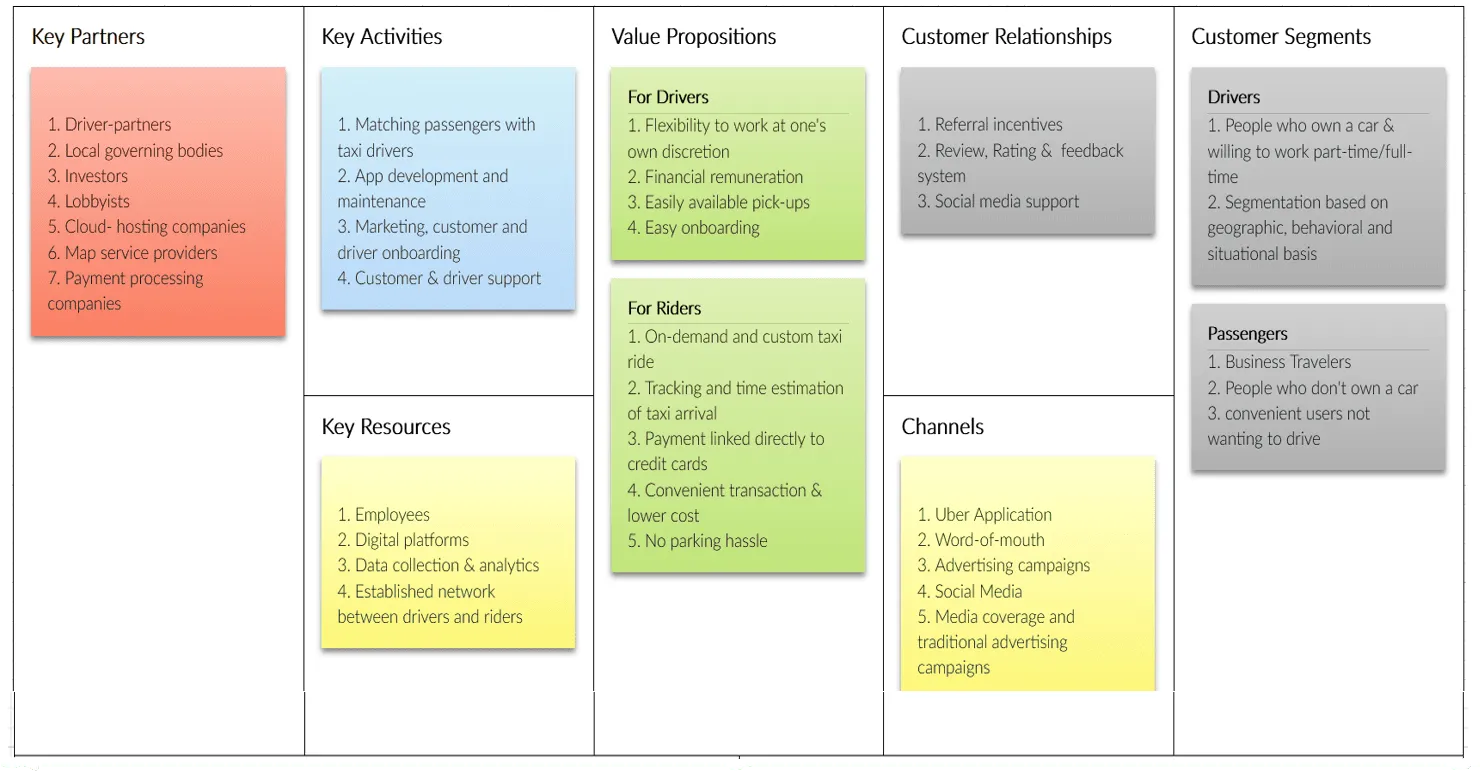
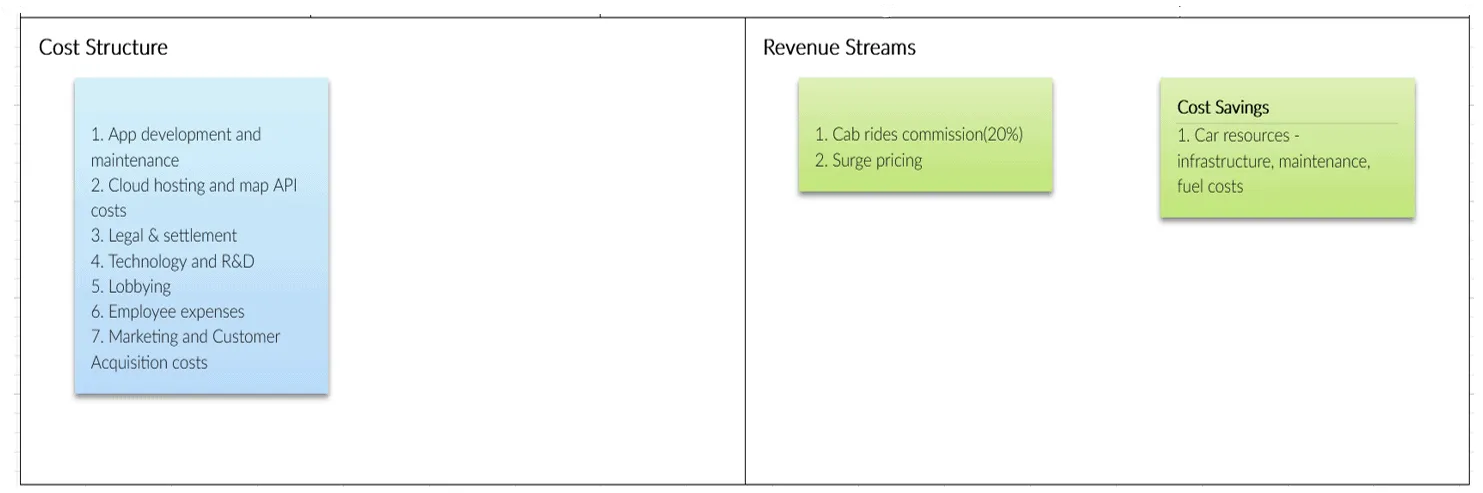
- Create a Business Model Canvas for Uber and understand the value creation process.
- Who are the winners, and who are the losers from the introduction of Uber?
- Why is it important for Uber to be considered a “technology platform” and not a “transportation company?” What would the implications be if Uber were a “transportation company?”
- What are the implications of business models like Uber’s on the future of employment? Do “sharing economy” companies have a responsibility to protect their workers (or contractors?)
Uber and the Ethics of Sharing: Exploring the Societal Promises and Responsibilities of the Sharing Economy Case Answers
1.) Create a Business Model Canvas for Uber and understand the value creation process.
2.) Who are the winners, and who are the losers from the introduction of Uber?
The winners are:
The Uber Company
Uber Corporation receives 20% of the charge fees paid by the drivers. Aside from that, they make more profit when the app grows in popularity.
Uber, a sharing economy firm, considers the driver-partners as independent contractors. Thus, the company incurs savings by not offering employment benefits & social security schemes.
Uber does not invest in a fleet of cars. Instead, the company invests in software that connects drivers and passengers, which is highly scalable and has a considerably more significant profit margin.
The Uber Passengers
Passengers can travel quickly and conveniently by searching for an Uber ride near them. The passenger also benefits from the payment scheme.
Before getting into the car, the passenger knows the transportation costs.
Passengers do not have to wait alongside the road, which exposes them to danger.
Also, they don’t have to bargain with local drivers because they can use Uber and sit inside to see the car on their phones.
The Uber Drivers
Uber’s drivers are self-employed individuals who use their app version to receive and respond to calls to be picked up and paid.
The drivers also benefit from the payment scheme. Uber drivers are exempt from regulations and do not pay the same high taxes as traditional taxi drivers.
The losers are:
Unlock Case Solution Now!
Get instant access to this case solution with a simple, one-time payment ($24.90).
After purchase:
- Solution files delivered straight to your inbox.
- Secure checkout — no account required.
Best decision to get my homework done faster!
Michael
MBA student, Boston
FAQ
How do I get access?
Upon purchase, you are forwarded to the full solution and also receive access via email.
Is it safe to pay?
Yes! We use secure payment providers to process your transaction safely.
What is Casehero?
We are the marketplace for case solutions - created by students, for students.